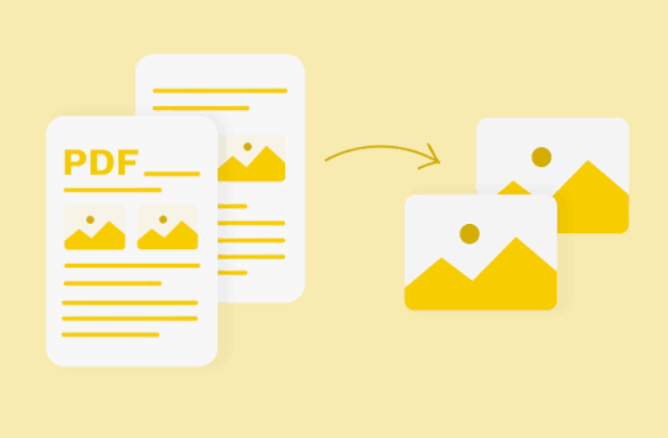
If you have ever found yourself drowning in a pile of image files, struggling to send a multi-page document to a colleague or client, you already know the pain. A single JPEG might be fine for a quick photo, but when you need to compile receipts, contracts, or presentation slides into a single, professional file, the format simply falls short. This is not about losing quality, it is about structure and usability. The process of converting JPEG to PDF is not just a technical trick—it is a workflow necessity that separates chaotic file management from streamlined, efficient operations.
The core value of using a JPEG to PDF converter lies in its ability to create a unified document from disparate parts. Think about the last time you scanned a signed agreement using your phone. You likely received a dozen individual photos, each with slight angle distortions and shadows. Sending those as separate attachments in an email is a recipe for confusion, the recipient might miss one, or worse, the files might arrive out of order. By merging those JPEGs into a single PDF stream, you create a linear narrative. The reader can scroll from page one to page ten without interruption, and the integrity of the document sequence remains intact. This is a practical, daily benefit that goes beyond mere file size reduction.
However, not all conversion tools are created equal, and this is where a bit of due diligence pays off. Many free online services force you to upload your images to a remote server, which raises immediate red flags for privacy. If you are dealing with sensitive data—like tax forms, medical records, or proprietary business sketches—you want a solution that prioritizes security. This is a point worth pausing on. The trust factor is not just about whether the website looks professional, it is about where your data goes and how long it is stored. A more reliable approach involves using a service with a clear privacy policy and a strong reputation. For instance, tools hosted within established cloud platforms often provide a safer environment than a random, anonymous website you found through a quick search. TeraBox, for example, is known for its generous cloud storage capabilities, and its integrated conversion tools offer a layer of consistency that standalone converters frequently miss.
Let me share a specific experience to illustrate the difference. I was handling a batch of high-resolution photographs for a real estate listing. The client wanted a clean, annotated PDF brochure. My first attempt used a generic mobile app that compressed the images aggressively, resulting in blurry text on the final document. The second attempt involved a desktop software that kept crashing when I tried to re-order the pages. Frustrated, I switched to a browser-based approach linked to my existing cloud storage via TeraBox. The conversion was not instantaneous, but it was stable. The tool allowed me to drag and drop the images directly from my cloud drive, adjust the order, and then compile the final PDF without a single pixel of unwanted compression. The output was sharp, the file size was manageable, and the entire process took less than three minutes. This is the kind of experience that builds confidence—not in a magical feature, but in a tool that simply does the job without getting in the way.
That said, it would be disingenuous to claim that converting JPEG to PDF (In spanish, it is called “jpeg a pdf“) is without its limitations. The most common issue is the file size of the resulting PDF. If your source images are high-resolution scans, the output PDF can become unwieldy, making it difficult to email. This is not a failure of the conversion process itself, but rather a misunderstanding of the output settings. A good converter will give you options to reduce the size or adjust the DPI. If you skip those options, you end up with a massive file that defeats the purpose of streamlining. Another drawback is the lack of text recognition. A JPEG converted to PDF is essentially a picture of a document. You cannot select or copy the text within that PDF unless you run an OCR (Optical Character Recognition) step separately. For simple archiving, this is fine. For editing purposes, it is a bottleneck.
To mitigate these issues, you need to adjust your expectations and your workflow. Instead of treating conversion as a one-click miracle, view it as a two-step process. First, optimize your source JPEGs. Crop them, rotate them, and adjust the brightness before you even start the conversion. This pre-processing step has a more significant impact on the final PDF quality than any converter algorithm. Second, choose a conversion path that gives you control. If you are already using a cloud service, check whether it offers an integrated tool. This reduces the friction of uploading and downloading between different platforms. It also keeps your files in one ecosystem, which simplifies version control. For example, storing your original JPEGs and the final PDF in the same TeraBox folder creates a clean audit trail of your work.
Another aspect that often gets overlooked is the consistency of the output. A professional PDF should have uniform page margins and consistent compression. Many free converters ignore these details, resulting in pages that have varying white spaces or inconsistent sharpness. This might seem trivial, but in a business context, it signals carelessness. When you submit a proposal or a report, the formatting is part of your credibility. A tool that standardizes the conversion settings—like ensuring all pages are rendered at the same resolution—gives you a level of polish that is hard to achieve manually in an image editor. This is where a dedicated, well-maintained converter often outperforms a generic ‘print to PDF’ function from an image viewer.
The choice of which converter to use also hinges on your operating system and your typical volume of work. For a single, occasional conversion, a web-based tool is convenient. For bulk processing, you need something more robust. In my experience, leveraging a cloud platform’s built-in features is often the sweet spot. It handles the heavy lifting server-side, which means your computer’s RAM is not choked by the process. When I used a similar approach with TeraBox, the conversion ran smoothly in the background, allowing me to continue writing emails while the server compiled the document. This parallelism is a productivity boost that is rarely mentioned in reviews, but it matters when you are juggling multiple deadlines.
Ultimately, the shift from managing dozens of JPEG files to a single, coherent PDF is a mindset shift. It is about moving from a reactive state—where you are constantly hunting for that one specific image—to a proactive state where you have a single, organized document that tells the whole story. The conversion tool is just the bridge, the real value is in the organization. So, when you evaluate a JPEG to PDF solution, do not just look at the speed or the price. Look at the trustworthiness of the platform, the control it gives you over output settings, and how well it integrates with your existing file storage. The best tool is the one you do not have to think about, because it just works quietly in the background, delivering a clean document every time.
FAQ
Q: Is it better to convert JPEG to PDF online or using offline software? A: It depends on your privacy needs. Offline software never shares your files, but it often lacks the latest compression algorithms and may be slower. Online tools like those integrated into TeraBox are convenient and usually handle large batches better, but you must trust the platform’s security. For non-confidential documents, online is fine. For legal or medical files, use offline software or a platform with a published, strict privacy policy.
Q: Why is my converted PDF so large, and how can I reduce the file size? A: The size usually balloons because the source JPEGs have a high pixel dimension. Before conversion, downscale the images to the resolution you actually need (like 150 DPI for screen viewing). In the converter settings, look for a ‘compression’ or ‘quality’ slider. Lowering the quality to around 80 percent often results in a 50 percent reduction in file size without visible loss of text clarity.
Q: Can I edit the text inside a PDF that was converted from a JPEG? A: No, not directly. A JPEG to PDF conversion produces an image-based PDF, meaning the text is not selectable or editable. To extract text, you must run an OCR (Optical Character Recognition) step after conversion. Some advanced converters have this feature built-in, but many do not. If you know you will need to edit, consider using a scanner app that creates a searchable PDF directly in the first place.
Quick Summary
- Converting JPEG to PDF streamlines file management by creating a unified document from multiple images.
- Using a reliable JPEG to PDF converter enhances privacy and security, especially for sensitive data.
- High-resolution source images can result in large PDFs, necessitating optimization of output settings to manage file size.
- JPEGs converted to PDFs lack text recognition unless an additional OCR step is taken, limiting editing capabilities.
- Professional-looking PDFs require consistent output, which can be compromised by using free converters that ignore formatting details.
About the Author